Mario’s $110M Payday: Breaking Down Super Mario Galaxy VFX and Salaries
The Super Mario Galaxy Movie just shattered the box office with a $372M opening. Ganesh Mishra breaks down the $110M budget and Pratt’s massive payday.

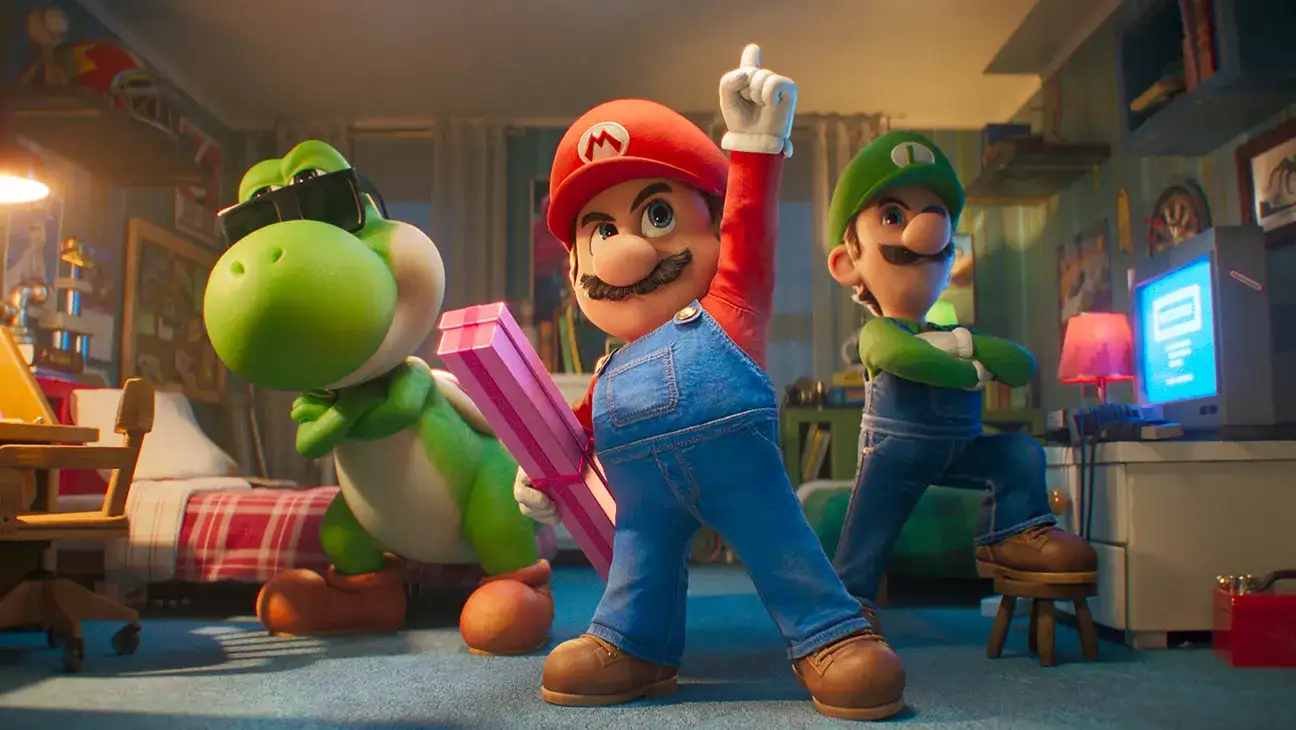
The Super Mario Galaxy Movie Financial Deep-Dive: Chris Pratt’s Backend Play vs. VFX Efficiency
HOLLYWOOD — April 9, 2026. Nintendo and Illumination have officially turned the Mushroom Kingdom into a printing press for hundred-dollar bills. If you thought the 2023 debut was a fluke, the financial data coming out of the launch for The Super Mario Galaxy Movie will set your hair on fire.
This sequel did not just open; it detonated, raking in a global total of $372.5 million in its first five days across 80 international markets.
We are talking about a movie that has already tripled its production cost before most people have even finished their opening-weekend popcorn.
This is not just a win for kids who like power-ups. It is a massive strategic earthquake for Universal and Nintendo.
For decades, Disney and Pixar held the crown by spending $200 million or more on a single animated feature. Illumination just proved you can build a massive, space-faring epic for roughly half that price. The financial ripple effect here is huge.
Every other studio is now looking at their $250 million animation budgets and wondering why they are paying for a Cadillac when a lean, mean Ferrari like The Super Mario Galaxy Movie is lapping them at the box office for a fraction of the cost.
The industry is currently obsessed with the efficiency of this deal. While the reviews from critics were essentially a lukewarm shower—landing a 40% on Rotten Tomatoes—the audience ignored the pundits entirely.
Families gave the film an A- CinemaScore and flooded the theaters, skewing 61% male overall. This disconnect between “art” and “commerce” is the exact sweet spot where a billion-dollar franchise is born.
The Lean Math of the Mushroom Kingdom
When we look at the actual production budget, the number that keeps coming up is $110 million.
That might sound like a lot of money to you and me, but in high-end animation, that is practically an indie budget.
For comparison, most Pixar sequels today carry price tags near $200 million. So, how did Chris Meledandri and the team at Illumination pull this off?
According to reports from Forbes and industry insiders, the heavy lifting on the visual effects and CGI was handled by Mac Guff, the Paris-based animation studio. By utilizing a specialized team in France, Illumination avoids the skyrocketing labor costs of Los Angeles or Vancouver.
This lean model allows them to put more money into the “A-list” voices that sell the posters without bloating the technical side of the ledger.
While a typical Disney project might cycle through thousands of artists and years of story changes, Illumination stays famously disciplined. They do not over-render, and they do not let the scale of a “galaxy” project push them into a $200 million hole.
The A-List Payday: Base vs. Backend
Which brings us to the actual talent. You do not get Chris Pratt and Jack Black back in the recording booth for a handful of gold coins.
Pratt, who returned to voice the world’s most famous plumber, has reached a level of bankability that few actors can touch. While his Marvel salaries total well over $20 million, his animation deals are often structured as a hybrid “backend play”.
Industry analysts at Deadline and other major trade outlets have noted that for massive franchise sequels like this, top-tier talent usually commands a base salary between $5 million and $10 million.
However, the real wealth is hidden in the backend profit participation. Chris Pratt and Jack Black likely have deals that grant them a percentage of the film’s net profits after it hits a certain box office threshold.
Given that the first film cleared $1.3 billion and generated an ROI of over 1263%, these points are effectively a license to print money.
Jack Black’s return as Bowser is particularly lucrative. His character’s viral moments in the first film made him indispensable for the sequel’s marketing machine. With his career box office earnings now exceeding $8.9 billion, he has the leverage to demand substantial bonuses that kick in once the film clears the break-even point.
This model keeps the upfront production budget lower while rewarding the actors for a massive hit.
The Gravity of the ROI
The math behind The Super Mario Galaxy Movie is a masterclass in risk management. Because the production cost sat at $110 million, the break-even point—even with a massive marketing spend that likely matched the production budget—is significantly lower than a live-action blockbuster like Project Hail Mary.
In North America alone, the film collected $130.9 million over its opening weekend.
Think about that for a second. The film earned back its entire production budget in the United States in just three days. Every dollar earned internationally, and every dollar earned domestically from Monday onward, is essentially gravy for Universal and Nintendo.
As per Variety and DailyHunt, the film’s global debut of $372.5 million puts it on a trajectory to easily cross the billion-dollar mark, making it the most profitable IP acquisition in recent memory.
Here is the bottom line: The Super Mario Galaxy Movie is a financial masterpiece even if it isn’t a critical one.
Nintendo and Illumination have found a way to commoditize nostalgia and bright colors with a precision that would make a Swiss watchmaker jealous. By keeping the budget at $110 million, they have created a safety net that allows them to survive even if the audience gets tired of the brand—which, clearly, they haven’t.
This movie is going to finish its theatrical run with a massive profit margin, likely cementing a third film before the end of the year.
It is a brilliant deal for the actors, who are about to see their bank accounts swell from backend points, and it is a home run for the studios.
Ganesh Mishra, Business Analyst
If you were a studio head, would you rather spend $200 million on a Pixar movie that critics love but struggles to break even, or $110 million on a Mario sequel that critics hate but prints money in its first five days?
Join BingeTake
Get Box Office Updates directly on WhatsApp from your personal Box Office Insider.