
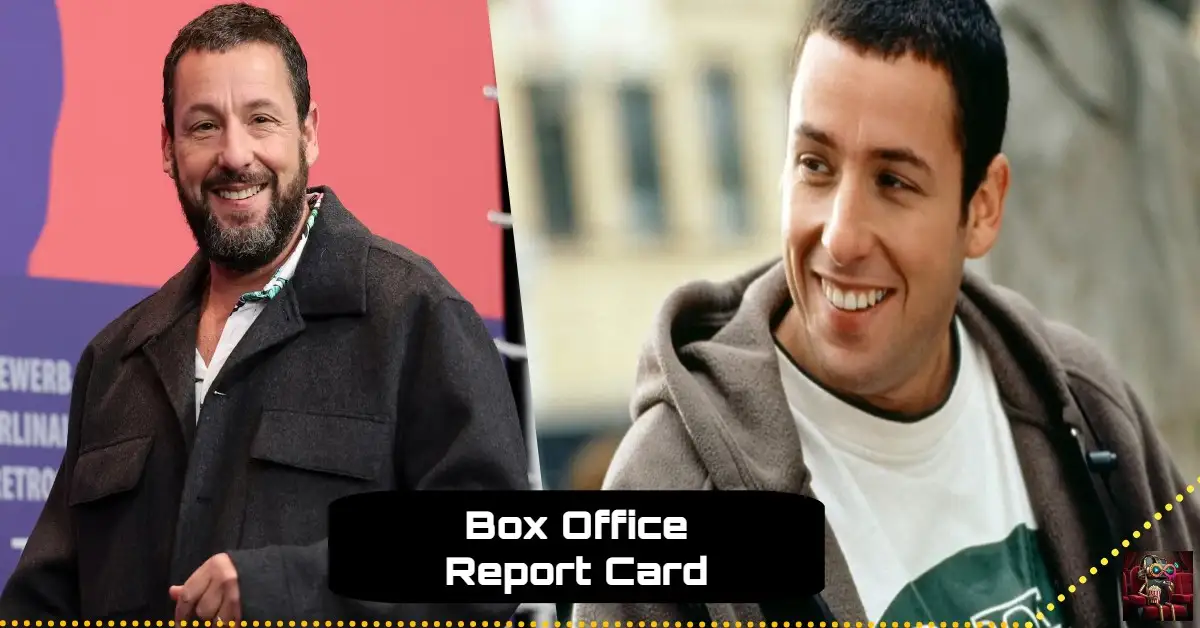
Why Adam Sandler is Still the Most Bankable Name in Comedy: A Complete Box Office Breakdown
LOS ANGELES — Adam Sandler is no longer just a movie star; he is a sovereign economic entity. As of April 2026, the cumulative worldwide box office for films anchored by the Sandman has officially crossed the $5.6 billion mark, a figure that cements his status as the most resilient comedy brand in theatrical history.
While his recent decade has been defined by a game-changing pivot to streaming, the sheer volume of his theatrical receipts from 1995 to 2026 remains the gold standard for mid-budget profitability.
Currently, the trade is still vibrating from the fallout of his $152.5 million production, Happy Gilmore 2, which hit home screens last summer and redefined the “Legacy Sequel” metric for the industry.
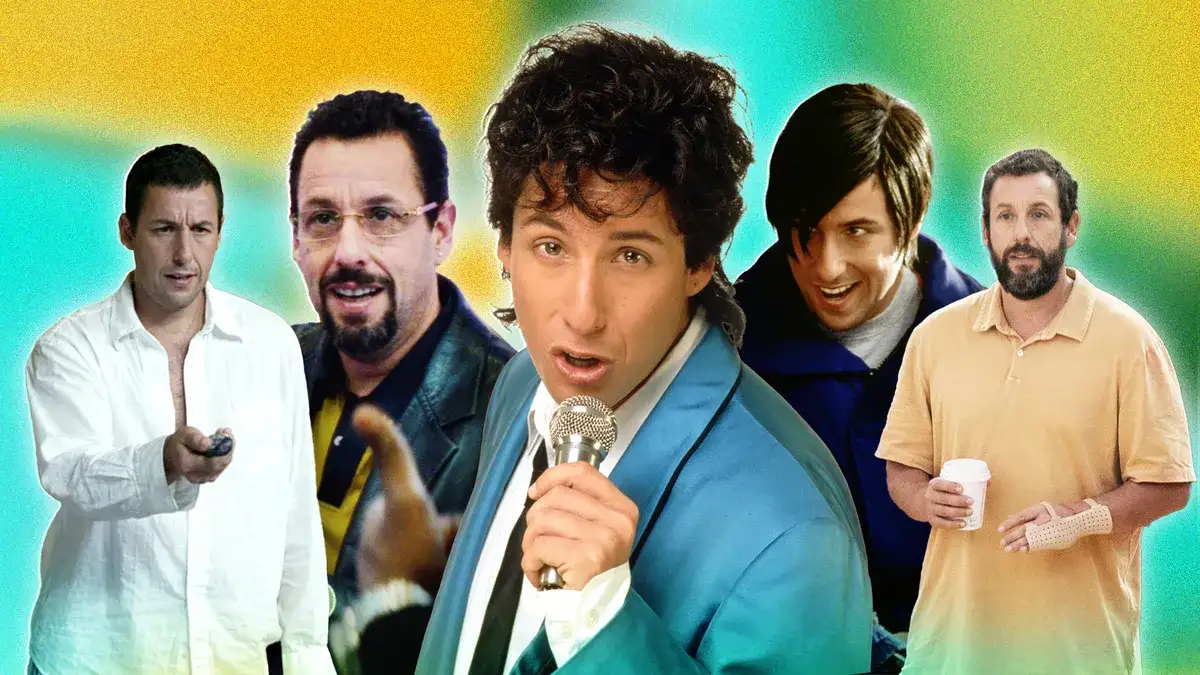
The Analysis: The Architecture of the Sandler Economy
When you look at the math behind Sandler’s career, you aren’t just looking at ticket sales; you are looking at a masterclass in demographic capture.
Sandler’s theatrical run was built on the “Everyman” multiple—a unique trade phenomenon where a film opens with a decent jump on Friday and maintains a steady hold throughout the quarter because it appeals to the 18-49 male quadrant like clockwork.
In the late 90s, Sandler was a studio executive’s safest bet. The Waterboy (1998) delivered an astronomical return, raking in $190 million on a slim $23 million budget. That is an 8x multiple that most modern blockbusters would kill for today. But the analysis deepens when you look at his 2010s output.
Even when critics were sharpening their knives, the domestic gross remained bulletproof. Grown Ups (2010) pulled in $271 million on an $80 million budget despite a dismal critical reception.
Why? Because Sandler understands “The Holdover.” His films don’t just “shatter” records on day one; they exist as reliable counter-programming that survives three or four summer tentpoles.
The current audience mood is one of deep nostalgia, which is exactly why the trade value of the Happy Gilmore brand skyrocketed in 2025. But here is the catch: Sandler has effectively exited the traditional theatrical game.
Is he still a box office draw?
Or has he become a “Subscription Driver”?
The data suggests that while he could still open a movie at $40 million domestically, the risk-reward ratio of the streaming model has permanently altered his theatrical footprint. He traded the “Per-Theater Average” for “Global Completion Rates,” and in doing so, he became the highest-paid actor in the world in 2024.
Breaking Down the Eras of the Sandman
To understand the report card, you have to look at the three distinct verticals of Sandler’s theatrical legacy: the $100M Comedy Juggernauts, the Animation Goldmine, and the Auteur Experiments.
The Golden Era of the Mid-Budget Smash
From 1998 to 2006, Sandler was practically printing money for the studios.
- Big Daddy (1999): A theatrical juggernaut that earned $235 million on a $34 million budget.
- Click (2006): This film was a massive win, grossing $241 million worldwide.
- 50 First Dates (2004): A rom-com staple that took in $199 million. During this era, an average Sandler opener was $35 million to $40 million. These weren’t “record-breakers” in the Avengers sense, but they were high-margin victories that fueled the studio’s bottom line for years.
The Animation Pivot
When the live-action comedy market began to soften, Sandler found a new life raft in the Hotel Transylvania franchise.
- Hotel Transylvania 3: Summer Vacation (2018): This remains his highest-grossing film of all time at $528 million worldwide.
- Hotel Transylvania 2 (2015): A massive hit that delivered $474 million. The international rollout for these films proved that Sandler’s voice—literally—had more global reach than his physical presence. The franchise has grossed over $1.37 billion to date, proving that the Sandler brand is elastic enough to capture the family demographic without losing its core identity.
The Reality Check: The Occasional Disaster
It hasn’t all been gold. Sandler’s report card has some red ink that every analyst should acknowledge.
- Little Nicky (2000): A disaster that made just $58 million on an $85 million budget.
- Spanglish (2004): A major miss, earning $55 million against an $80 million price tag.
- Jack and Jill (2011): While it grossed $150 million, its $79 million budget and heavy marketing spend made it a theatrical break-even at best.
The Forward-Looking Projection
Look, let’s be decisive. Adam Sandler is the only star from the Saturday Night Live era who has successfully future-proofed his career.
While his “Theatrical Run” as we knew it in 1999 is over, his trade value has never been higher. By moving to the streaming model, he eliminated the “Friday-to-Sunday” anxiety and replaced it with a guaranteed $250 million production pipeline.
My take?
If Sandler were to release a high-concept comedy in theaters today—something like Happy Gilmore 2—it would likely land a $45 million opening weekend and settle at a $160 million domestic gross. But he’s too smart for that. He is letting the studios chase the $200 million “Opening Day” while he secures the “Lifetime Value” of his audience.
His lifetime domestic collection is effectively frozen in the low $3 billion range, but his global brand impact is pushing toward $10 billion when you factor in digital engagement.
Nitesh Mishra, Box Office Analyst
Join BingeTake
Get Box Office Updates directly on WhatsApp from your personal Box Office Insider.
Related Posts




You May Have Missed
About the Author

Nitesh Mishra
Box Office Analyst
As a Movie buff with years of experience in film blogging, writing and box office analysis, I specialise in delivering accurate box office insights and movie updates. [X, Instagram, Reddit, Threds]