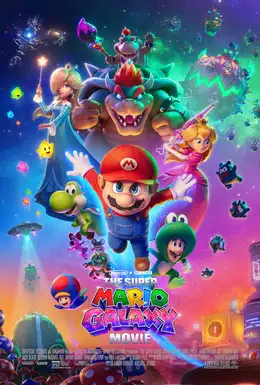
The Super Mario Galaxy Movie Salaries: How Much Did the Cast Make?
Ganesh Mishra decodes the $110M budget of The Super Mario Galaxy Movie. See how Chris Pratt and the star-studded 2026 cast helped net $414M in days.

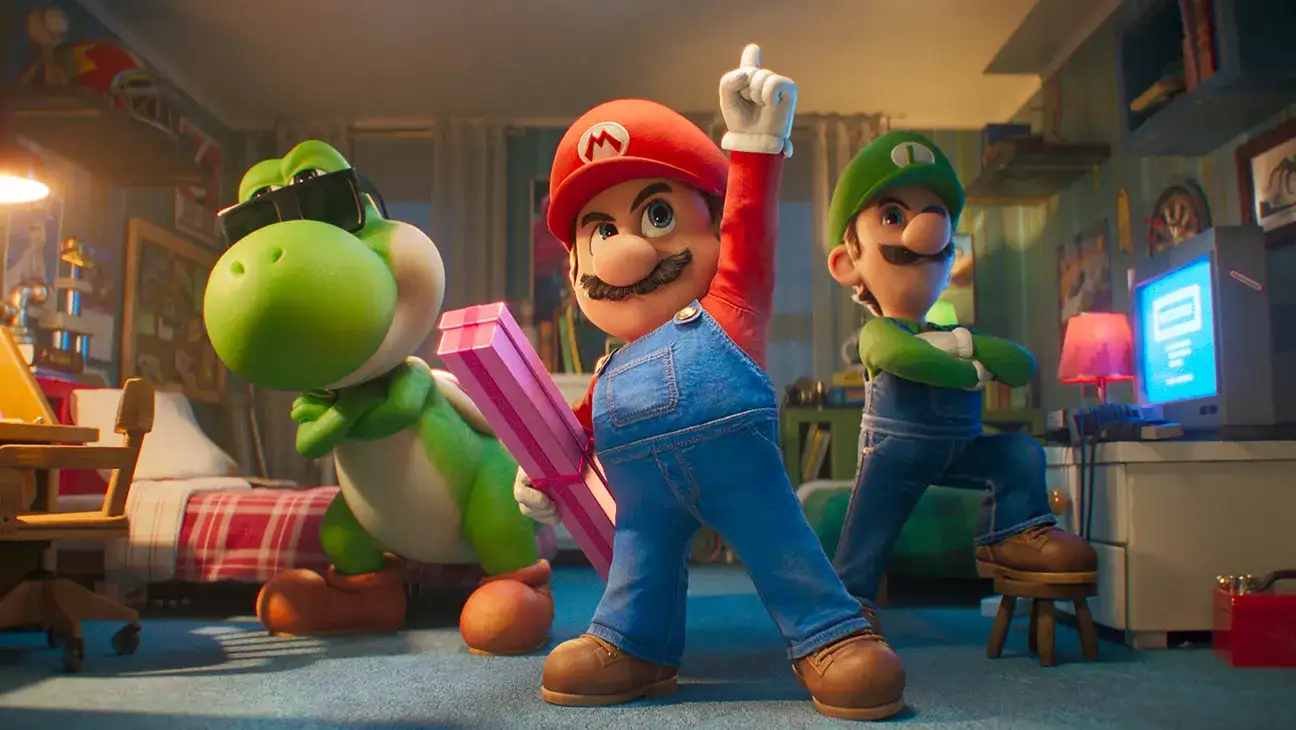
The Super Mario Galaxy Movie Cast Salaries, Budget, and ROI: Universal’s Biggest Win
LOS ANGELES — The coins aren’t just clinking in the Mushroom Kingdom; they are raining down in a torrential downpour. The Super Mario Galaxy Movie has blasted off into the 2026 theatrical window with a $372.5 million worldwide opening frame.
If you’ve been tracking the trajectory of Nintendo and Illumination’s partnership, you know this isn’t just a movie. It is a massive financial engine.
The film has already grossed $414 million worldwide against a production budget of $110 million. As a dealmaker, that is the kind of ROI that makes studio heads weep with joy. It’s officially the highest-grossing animated film of the year so far.
This isn’t just about the box office, though. This is a case study in how to build a content empire in an era where “Streaming Wars” are forcing everyone to rethink their business models.
Universal and Nintendo aren’t just making movies; they are building a locked ecosystem. While other studios are bleeding cash trying to figure out SVOD retention, Illumination is sticking to the theatrical window and winning big. They kept the budget at a lean $110 million—the same as its predecessor—while adding heavy hitters to the voice cast.
The current market mood is hungry for theatrical events that justify a premium ticket.
The Super Mario Galaxy Movie hit theaters in early April 2026 and immediately established itself as the third-highest-grossing film of the year. The real question isn’t whether people will show up; it’s how much of that $110 million budget went into the pockets of the A-list stars behind the microphones.
The Talent Pipeline and the Paycheck Math
When you have a billion-dollar hit under your belt, the sequel usually triggers a “renegotiation fever.”
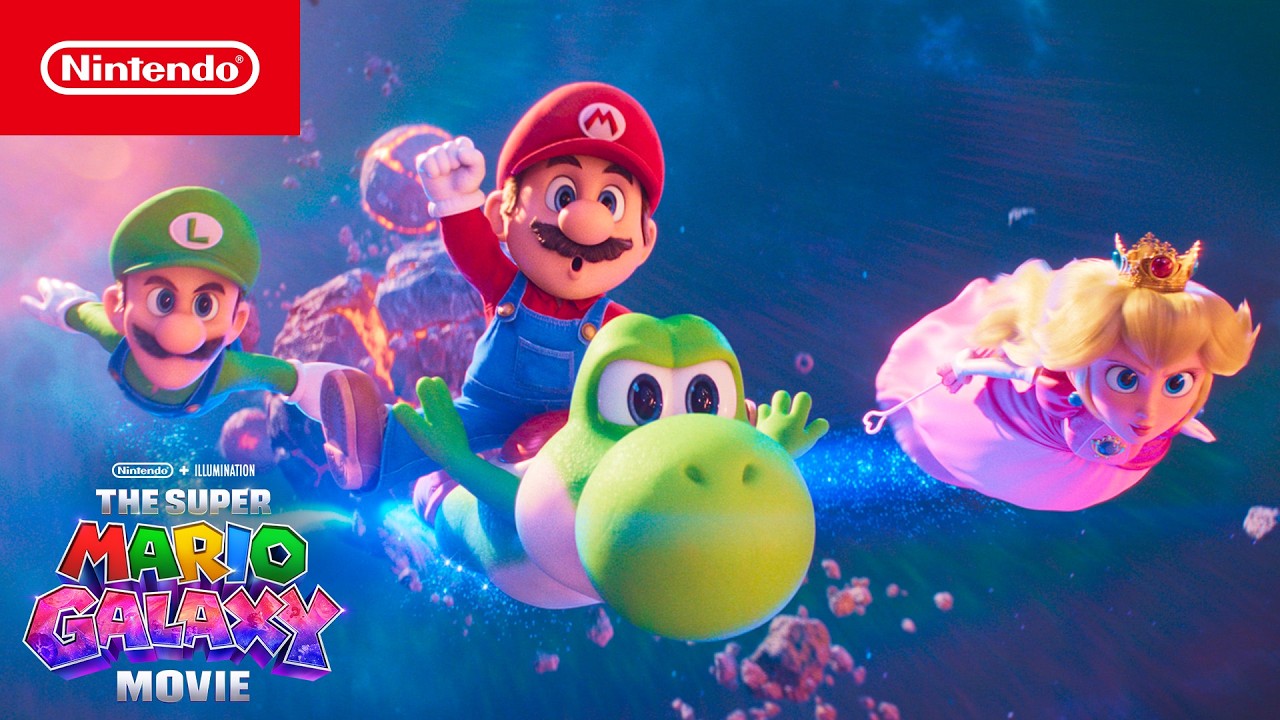
For The Super Mario Galaxy Movie, Chris Pratt, Anya Taylor-Joy, Charlie Day, Jack Black, and Keegan-Michael Key all reprised their roles.
While specific individual salary figures for the 2026 sequel have not been officially disclosed by Universal or Illumination, industry trends for high-performing animation sequels suggest a significant shift toward backend points.
In the first film, Pratt reportedly took a healthy upfront fee, but for a sequel of this magnitude, the real money is in first-dollar gross and backend participation. With a $110 million budget, the cast’s total compensation likely takes up about 25% to 30% of the production overhead.
For a returning star like Pratt, his asking price has likely surged past the $10 million mark upfront, plus a piece of the profit participation.
The newcomers for 2026 have also added some serious weight to the payroll. Benny Safdie, Donald Glover, Glen Powell, and Brie Larson joined the cast for this outing.
Getting names like Glen Powell—who is currently the most bankable man in live-action—into an animated booth is a power move.
It suggests that Nintendo isn’t just looking for voices; they are looking for IP boosters. According to industry reports on talent acquisitions for the 2026 slate, actors like Glover and Powell command high seven-figure salaries even for voice-over work, especially when the project is a guaranteed global hit.
Breaking Down the $110 Million Production Budget
The fact that Illumination managed to keep the budget at $110 million while expanding the cast is a masterclass in production infrastructure.
Compare this to the $248 million budget for Project Hail Mary or the ballooning costs of Disney’s recent animation efforts. Illumination’s strategy involves a tightly controlled workflow that prioritizes efficiency over pure visual excess.
Where did the money go?
- Voice Talent: Roughly $30M to $35M. This includes the massive pay bumps for the returning Five (Pratt, Taylor-Joy, Day, Black, Key) and the entry fees for the newcomers.
- Animation & VFX: Approximately $50M to $60M. The “Galaxy” theme requires more complex lighting and gravitational physics simulations than the first film, but Illumination’s proprietary tech pipeline keeps these costs lower than competitors like Pixar or Sony.
- Script & Music: $10M to $15M. Hiring top-tier writers to handle the Nintendo IP is a premium cost, and the licensing for iconic Koji Kondo themes is a non-negotiable expense.
Even with these “estimated” allocations, the film is a profit-making machine. If the production is $110 million and marketing (P&A) is estimated at another $100 million, the breakeven point is roughly $420 million. Having already crossed $414 million in its opening frame, the movie is essentially in the black before its second weekend.
The Strategic Power of First-Dollar Gross
One of the secret connections in Hollywood deals is how actors leverage their success for future “independent” projects.
Jack Black, who has become the face of the Mario franchise’s viral marketing, likely has a deal that heavily rewards theatrical performance.
For stars like Anya Taylor-Joy and Brie Larson, these animated roles act as a “stabilizer” for their career—they provide massive global reach and high ROI while they pursue more artistic, risky live-action work.
Universal and Nintendo have created a monopoly on the “family theatrical” niche. By keeping the budget under control at $110 million, they allow for a much wider profit margin, which in turn allows them to pay the cast more in the long run through syndication rights and digital sales.
This is a genius move for the studio.
Nintendo and Illumination have proven that they don’t need to spend $200 million on production to get a $1 billion result.
They are running a lean, high-quality talent pipeline that keeps the actors happy with backend points while keeping the studio’s risk at a minimum.
For the actors, it’s the ultimate “passive income” gig—short recording sessions, massive global exposure, and a check that will keep coming in every time the movie is played on a plane or a streaming service for the next decade.
I forecast that The Super Mario Galaxy Movie will end its theatrical run near $1.2 billion, making it one of the most profitable films in Universal’s history.
If you are an actor right now, your agent is likely calling Illumination to get you into the next Nintendo project.
Ganesh Mishra, Business Analyst
Join BingeTake
Get Box Office Updates directly on WhatsApp from your personal Box Office Insider.
Related Posts





You May Have Missed
About the Author

Ganesh Mishra
Business Analyst
Hi, I'm Ganesh. I’ve spent the better part of my career obsessed with how the entertainment industry actually works behind the scenes, looking at the contracts, the streaming wars, and the massive deals that decide what you’ll be watching next Friday. I love breaking down complex business moves into simple stories, and I’m here to make sure you’re always the most informed person in the room when it comes to the business of entertainment.