
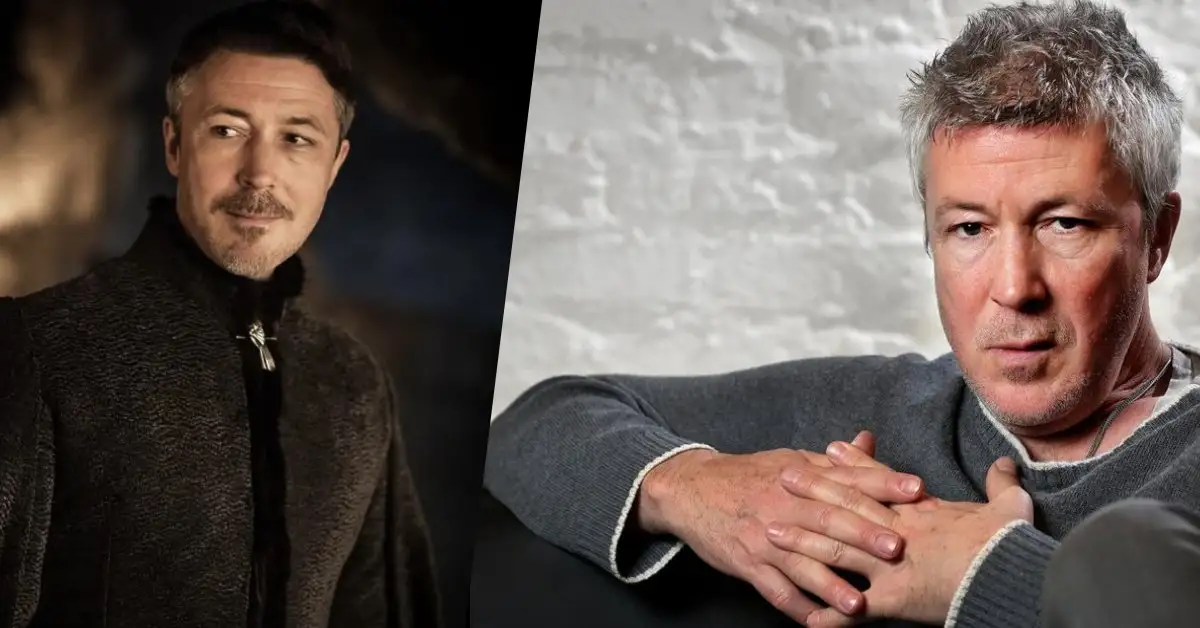
LOS ANGELES — Aidan Gillen is the ultimate theatrical insurance policy. As of April 24, 2026—incidentally, the actor’s 58th birthday—his cumulative career worldwide box office gross has officially vaulted past the $1.7 billion mark.
This is a massive milestone for a specialist who has spent the better part of three decades navigating the treacherous gap between prestige television and big-budget studio tentpoles.
While the industry is currently buzzing over his inclusion in the high-stakes Hong Kong prequel Cold War 1994, which premieres in Shenzhen this weekend, the trade reality of Gillen’s career is one of calculated ensemble play rather than brute-force leading man draw. He is the man you hire to make your blockbuster feel smarter, and the numbers reflect that tactical value.
The Ensemble Insurance Policy
The trade logic behind Aidan Gillen’s career is simple. He is a force multiplier. Studios don’t cast him to open a movie at $100 million on a Friday; they cast him to ensure the film has the prestige “legs” to last through the quarter.
When you look at his biggest hits, you see a pattern of high-value supporting roles that anchor massive global IPs. From the dystopian grit of the Maze Runner series to the record-breaking rhythm of Bohemian Rhapsody, Gillen has become the definitive bridge between high-art performance and mass-market commerciality.
His involvement in Bohemian Rhapsody (2018) remains his career high-water mark.
That film was a theatrical juggernaut, raking in $910.8 million worldwide against a lean $52 million production budget.
It didn’t just break records for musical biopics; it redefined the ROI potential for adult-skewing dramas. For Gillen, playing manager John Reid wasn’t just a role; it was a trade signal.
It proved that he could exist within a billion-dollar ecosystem without losing his character-actor edge. That kind of versatility is exactly why he continues to find work in massive international rollouts like the upcoming Cold War franchise.
The Reality Check: TV Prestige vs. Leading Man Draw
Here is the truth about the current audience mood in 2026. They love the villain, but they aren’t always buying the leading man.
While Gillen’s status as “Littlefinger” from Game of Thrones gives him instant global recognition, the trade data shows a significant disconnect when he steps into the solo spotlight. Think about his recent Irish noir, Barber. Despite strong critical reviews and a tactical rollout in April, the domestic gross for his solo vehicles remains a fraction of his ensemble totals.
Is Aidan Gillen a box office draw on his own, or is he the ultimate value-add for a director like Christopher Nolan or Sam Esmail? The evidence points aggressively toward the latter.
When he is part of a “spectacle” ensemble, the per-theater average stays healthy. When he carries the poster alone, the audience demographic skews heavily toward a niche, older crowd that doesn’t always show up for the opening weekend “rush.” Is he okay with that?
He should be.
His $1.7 billion career total is built on being the most interesting person in a $200 million room.
From Queen to King Arthur
To understand the Aidan Gillen report card, you have to look at the cold, hard math of his Friday-to-Sunday weekend numbers and the long-term holds that define his “verdicts.”
- Maze Runner: The Scorch Trials (2015): This was a surgical strike. Produced on a $61 million budget, the sequel sprinted to a $30 million opening weekend. It eventually finished with a worldwide gross of $312.3 million. That is a 5x return on production investment. This film solidified Gillen as the go-to antagonist for the YA demographic, a role he reprised in The Death Cure ($288M worldwide).
- Bohemian Rhapsody (2018): The Friday-to-Sunday trajectory was a masterclass. It opened to $51.1 million domestically—far exceeding the early studio estimates of $35 million. It showed incredible resilience, with second and third weekend drops of less than 40%. This is where Gillen’s $1.7 billion total gets its backbone.
- King Arthur: Legend of the Sword (2017): This was the disaster. Every career has one. Produced for a massive $175 million, the Guy Ritchie epic only managed $148 million worldwide. It lost the studio over $150 million. Despite Gillen’s solid turn as Goosefat Bill, the film’s “average opener” status couldn’t be saved by star power. It remains the rare black mark on a generally profitable ledger.
- Sing Street (2016): The indie darling. This $4 million film grossed $13.6 million worldwide. That is an ROI of 240%. It’s a reminder that Gillen doesn’t need a $100 million budget to find a theatrical multiple.
BingeTake Verdict: The Master of the Pivot
Aidan Gillen is playing a very smart game in the mid-2020s.
He has successfully dodged the “TV actor” trap by maintaining a steady stream of high-profile supporting roles in films that travel well globally. His inclusion in Cold War 1994—a prequel to a major Hong Kong crime franchise—is a brilliant trade move.
It expands his brand into the massive Asian theatrical market while maintaining his Western prestige.
My forward-looking verdict?
This is excellent news for his longevity.
Gillen will never be the guy who carries a $200 million original IP on his shoulders, but he will be the guy who ensures those $200 million films feel grounded. His lifetime domestic collection is steady, but his true power lies in the international rollout.
Expect his career gross to clear the $2 billion mark by the end of 2027 as his current slate of ensemble thrillers hits the charts. He is a trade veteran who knows exactly where the money is.
Join BingeTake
Get Box Office Updates directly on WhatsApp from your personal Box Office Insider.
Related Posts





You May Have Missed
About the Author

Nitesh Mishra
Box Office Analyst
As a Movie buff with years of experience in film blogging, writing and box office analysis, I specialise in delivering accurate box office insights and movie updates. [X, Instagram, Reddit, Threds]