
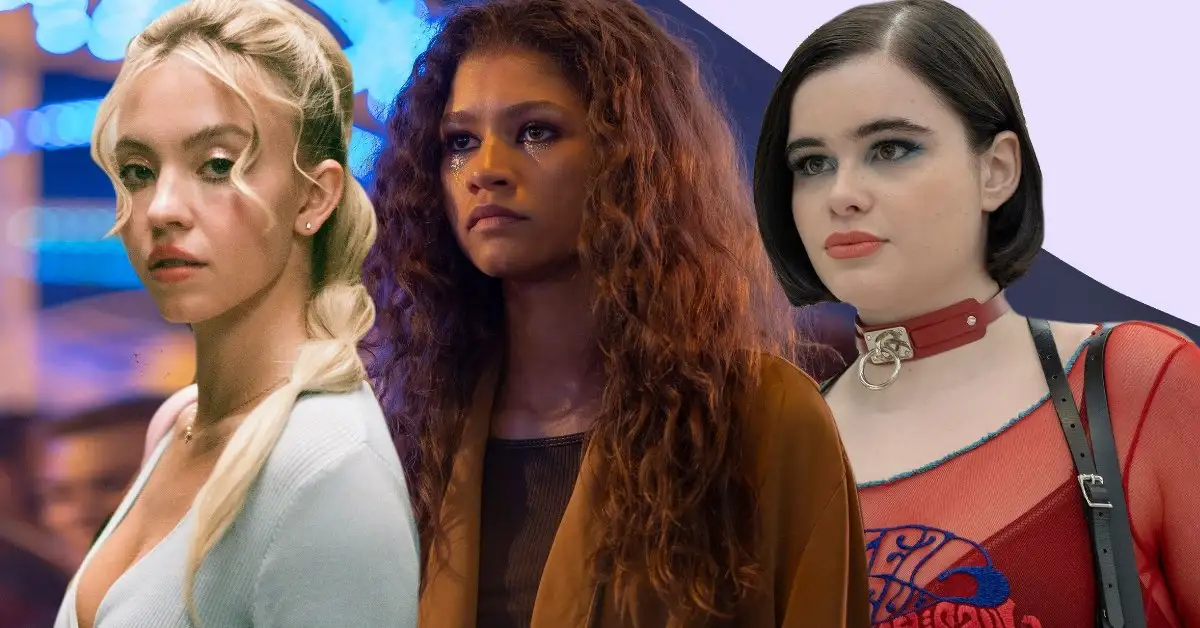
From Rue’s Relapse to the Winter Formal: A Deep-Dive Recap of the Euphoria Season 1 Episodes That Defined a Generation
WASHINGTON — If you are currently sitting on your couch wondering why everyone on your feed is arguing about Euphoria again, you have likely realized that the wait for the new season is finally over.
It is April 2026, and after what felt like a decade of delays, Sam Levinson’s glittery, grimy masterpiece is back on our screens. But before you jump into the new chaos, you have to remember where the madness started.
Season 1 was not just a show; it was a cultural reset that turned glitter into a personality trait and made Zendaya a household name.
The show first landed on HBO with the force of a tidal wave. It redefined the teen drama by throwing out the Dawson’s Creek playbook and replacing it with A24 aesthetics and a soundtrack that lived in our heads rent-free.
According to The Hollywood Reporter, the show’s impact on the industry was massive, proving that “prestige” television could exist for Gen Z without losing its edge. It was raw, it was messy, and it was unapologetically loud about addiction and identity.
But let’s be real for a second. Looking back at Season 1 from the vantage point of 2026, it is fascinating to see how much the industry has tried to chase that high.
We have seen countless copycats, but nothing quite hits like that first time Rue Bennett walked out of rehab with absolutely zero intention of staying clean.
The Pilot and the Birth of East Highland
The series kicks off with Pilot, and it wastes no time setting the stakes.
We meet Rue, our narrator, who just spent her summer in rehab after an overdose. She is seventeen, tired, and immediately heads to her dealer, Fezco, to pick up exactly where she left off. This episode is where the Euphoria DNA is coded—the dizzying camera work and the introduction of Jules Vaughn, the new girl in town who instantly changes Rue’s orbit.
At McKay’s summer party, the ensemble cast truly starts to shine. We see Cassie and McKay’s fragile connection, Kat’s initial insecurities, and the powder keg that is Nate and Maddy’s relationship.
As per the official HBO episode guide, the party is the catalyst for everything that follows, including Nate’s violent outburst against Jules and the revelation that Nate’s father, Cal, has a secret life that is about to collide with everyone else’s.
Backstories and Digital Identities
Episodes 2 and 3, Stuntin’ Like My Daddy and Made You Look, do the heavy lifting of fleshing out the monsters and the victims.
We get Nate’s origin story—a deep dive into the trauma of discovering his father’s sex tapes at age eleven. It is a chilling look at how toxic masculinity is manufactured. Meanwhile, Kat Hernandez has a digital awakening. After a sex tape of her leaks, she decides to take control of her narrative by becoming a camgirl.
This is where the show really started to feel like a “Juul-era” Degrassi. It captured the specific anxiety of living your life online.
According to a 2021 retrospective in PopMatters, these episodes were pivotal in showing how these characters used the internet to both hide and find themselves. Jules starts talking to “Tyler” online, unaware that she is being catfished by Nate in a bizarre, obsessive revenge plot.
The Carnival and the Point of No Return
If you ask any fan for the most iconic moment of the season, they will point to Episode 4, Shook Ones Pt. II. The carnival setting is a masterclass in tension and cinematography. It is where all the plot lines converge under neon lights. Jules finally meets “Tyler” and realizes it is Nate, who uses her nudes to blackmail her.
Maddy and Cassie do molly and wander through the chaos, while Rue tries to play chaperone for her sister, Gia.
The technical excellence of this episode cannot be overstated. Variety noted in a production deep-dive that the logistics of shooting a functioning carnival with those specific “spinning” camera rigs were a nightmare, but it resulted in some of the most memorable TV of the decade.
It was the moment Euphoria transitioned from a teen show to a visual epic.
Toxicity and the Halloween Descent
Episodes 5 and 6, ’03 Bonnie and Clyde and The Next Episode, push the relationships to their breaking points.
Nate and Maddy deal with a police investigation after Nate’s assault on her becomes public, but they remain locked in their toxic loop. This is the “Ride or Die” era that launched a thousand memes and Halloween costumes.
Speaking of Halloween, Episode 6 gives us the legendary costumes—Jules as Romeo + Juliet and Kat as a leather-clad queen—while Rue’s sobriety starts to slip.
By this point, the pressure on Jules to be Rue’s “reason” for staying sober becomes a central theme.
In an interview with The Television Academy, Sam Levinson mentioned that he wanted to show the weight that addiction puts on the people around the addict, not just the addict themselves. It was heart-wrenching to watch Jules start to pull away as Rue became more dependent.
The Depression and the Winter Formal Finale
The season wraps up with The Trials and Tribulations of Trying to Pee While Depressed and the finale, And Salt the Earth Behind You. Episode 7 is a stark, honest look at a depressive episode. Rue spends the entire time watching 22 straight episodes of a British reality show because she literally cannot get out of bed to go to the bathroom. It is a relatable, albeit painful, depiction of mental health that resonated deeply with audiences.
The finale takes us to the Winter Formal. It is a whirlwind of confrontation.
Rue stands up to Nate, Cassie deals with the fallout of her pregnancy, and Maddy finally finds the evidence of Cal’s secret life. The season ends on a surreal note with a massive musical number set to All For Us.
According to Billboard, the track became a global hit, cementing the show’s legacy as a multi-sensory experience. Rue refuses to get on the train with Jules, chooses to stay back, and ultimately relapses, leaving us on a devastating cliffhanger.
Season 1 of Euphoria remains the gold standard for the “Vibe Shift” in modern television.
While Season 2 went for even more shock value and Season 3 is currently trying to reinvent itself as a daytime noir, the first eight episodes were the perfect lightning in a bottle. They captured a specific Gen Z nihilism that felt authentic because it was rooted in Sam Levinson’s own history with addiction.
Is it “misery porn”? Maybe. But it is high-budget, beautifully acted, and emotionally resonant misery porn.
Zendaya’s performance here wasn’t just good—it was transformative.
She took a character that could have been a cliché and made her the beating, bruised heart of the show. If you are rewatching now, pay attention to the silence between the glitter. That is where the real story lives.
Barkha Jha, Journalist
Looking back at the Season 1 finale, do you think Rue made the right choice by staying behind, or was her fear of leaving East Highland the very thing that broke her?
Join BingeTake
Get Box Office Updates directly on WhatsApp from your personal Box Office Insider.
Related Posts





You May Have Missed


About the Author

Barkha Jha
Journalist
I’m Barkha Jha — a writer Since 2019’ experience in TV and celebrity news. currently working at BingeTake where I cover entertainment and industry updates. [X, YouTube, Medium]