Lee Cronin’s The Mummy Break-Even Analysis and Box Office ROI
Dive into the Hollywood math behind Lee Cronin’s The Mummy. We break down the $22M budget, P&A costs, PVOD strategies, and the $55M break-even point.

Inside the $22M Budget and Profit Thresholds for Lee Cronin’s The Mummy
LOS ANGELES — The mummies are out of the tomb, but the financial math is what’s truly keeping studio executives up at night.
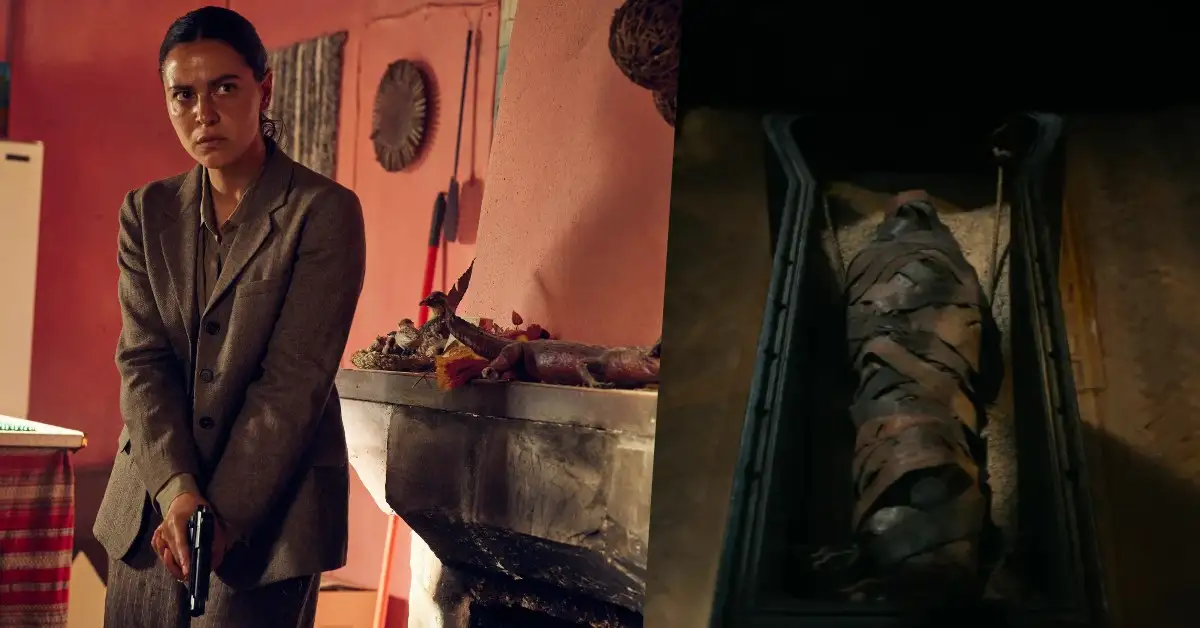
Lee Cronin’s The Mummy just hit theaters, carrying a $22 million production budget and the heavy expectations of the mid-market horror genre. By tapping Lee Cronin, the architect behind the massively profitable Evil Dead Rise, New Line Cinema and Warner Bros. are making a calculated bet. This is a gritty, gore-heavy possession film masquerading as a monster movie.
The core business deal here is fascinating. Jason Blum and James Wan pushed to reinvent a classic trope, but they kept the budget relatively tight.
A $22 million price tag is not pocket change, but in today’s IP-driven theatrical market, it represents a highly strategic risk profile.
Every major studio is watching this rollout closely because it tests the absolute floor of the modern horror theatrical window. For the past few years, we have seen massive volatility. Universal and Blumhouse struck gold with The Invisible Man, which raked in $144 million globally on a microscopic $7 million budget. But then the market shifted.
Last year’s Wolf Man stumbled hard, pulling in only $35 million worldwide against a $25 million budget. The streaming wars have conditioned audiences to wait for SVOD releases unless a film demands a communal theatrical experience. By slapping Cronin’s name in the title, the producers are signaling auteur-driven, premium horror to justify the price of a movie ticket.
If this film hits its internal metrics, it sets a new baseline for how studios package and finance legacy monster IP without relying on nine-figure blockbuster budgets.
But here is a serious question for the industry: why did Blumhouse and Atomic Monster bother leasing the Mummy moniker if they were just going to make an original possession thriller?
The truth is that Hollywood is terrified of unbranded original concepts. The IP acquisition was essentially a marketing parachute.
They knew the 2017 Tom Cruise iteration poisoned the traditional Dark Universe well. By keeping the title but pivoting to a domestic, family-centric setting, they manipulated audience curiosity. It is a brilliant, albeit cynical, business move.
The Math Behind the Sarcophagus
Let us break down the actual theatrical math. The production budget sits firmly at $22 million.
In a post-pandemic theatrical landscape, P&A costs for a wide-release genre film usually mirror the production budget.
We can safely assume Warner Bros. spent roughly $20 million to $25 million marketing this picture globally. That brings the total sunk cost to around $45 million before a single ticket is scanned.
To achieve theatrical profitability, the studio needs to hit the legendary multiplier. Because exhibition chains keep roughly fifty percent of domestic ticket sales and up to sixty percent internationally, a movie typically needs to gross two and a half times its production budget just to break even.
For Lee Cronin’s The Mummy, that profit threshold sits right at $55 million.
Early tracking shows the film eyeing a $12 million domestic opening weekend. That number might sound soft, but it is entirely functional if the film has legs.
Average ticket prices in North America are currently hovering around $11.50, meaning roughly a million people need to show up this weekend. The film secured a C+ CinemaScore, which is actually fairly standard for extreme gore. If the word-of-mouth holds among hardcore genre fans, it should clear a 2.5x domestic multiple, finishing its run around $30 million in North America.
According to Variety, the $22 million budget gives this film a significantly lower hurdle than The Wolf Man.
Even if the global box office stalls at $45 million, falling short of theatrical break-even, the film is not a flop. This is where the modern windowing strategy saves the balance sheet.
The Backend and SVOD Safety Net
Once the film leaves theaters, it enters the PVOD market. Premium Video on Demand is a cash cow. When you rent a movie for $19.99 at home, the studio keeps eighty percent of that transaction. If Lee Cronin’s The Mummy moves two million digital units globally, that is an immediate $32 million in pure revenue.
Furthermore, Warner Bros. Discovery has the ultimate safety net: Max. The internal accounting for transferring the film to their proprietary streaming service will easily cover any remaining P&A deficits.
Jason Blum and James Wan likely have first-dollar gross backend points, meaning they get paid a percentage of the box office revenue from day one, regardless of whether the studio has recouped its marketing spend.
Cronin himself probably negotiated a hefty bump in his upfront fee after his previous success, alongside modest backend points tied to specific box office milestones.
The BingeTake Verdict
Is this a good deal for New Line and Blumhouse? Absolutely. The $12 million opening may not break records, but a $22 million horror picture with a localized setting is incredibly insulated from financial disaster.
The days of spending $170 million on a monster movie are dead and buried. By managing the P&A spend and relying on heavy digital afterlife revenue, Lee Cronin’s The Mummy will ultimately turn a tidy profit by year’s end. It will not buy anyone a new superyacht, but it will keep the lights on and guarantee Cronin his asking price for whatever he chooses to direct next.
Question for the BingeTake community: if you were a studio executive, would you rather risk $25 million on original horror or pay a premium to attach an old monster IP to the same script?
Join BingeTake
Get Box Office Updates directly on WhatsApp from your personal Box Office Insider.
Related Posts





You May Have Missed
About the Author

Ganesh Mishra
Business Analyst
Hi, I'm Ganesh. I’ve spent the better part of my career obsessed with how the entertainment industry actually works behind the scenes, looking at the contracts, the streaming wars, and the massive deals that decide what you’ll be watching next Friday. I love breaking down complex business moves into simple stories, and I’m here to make sure you’re always the most informed person in the room when it comes to the business of entertainment.