
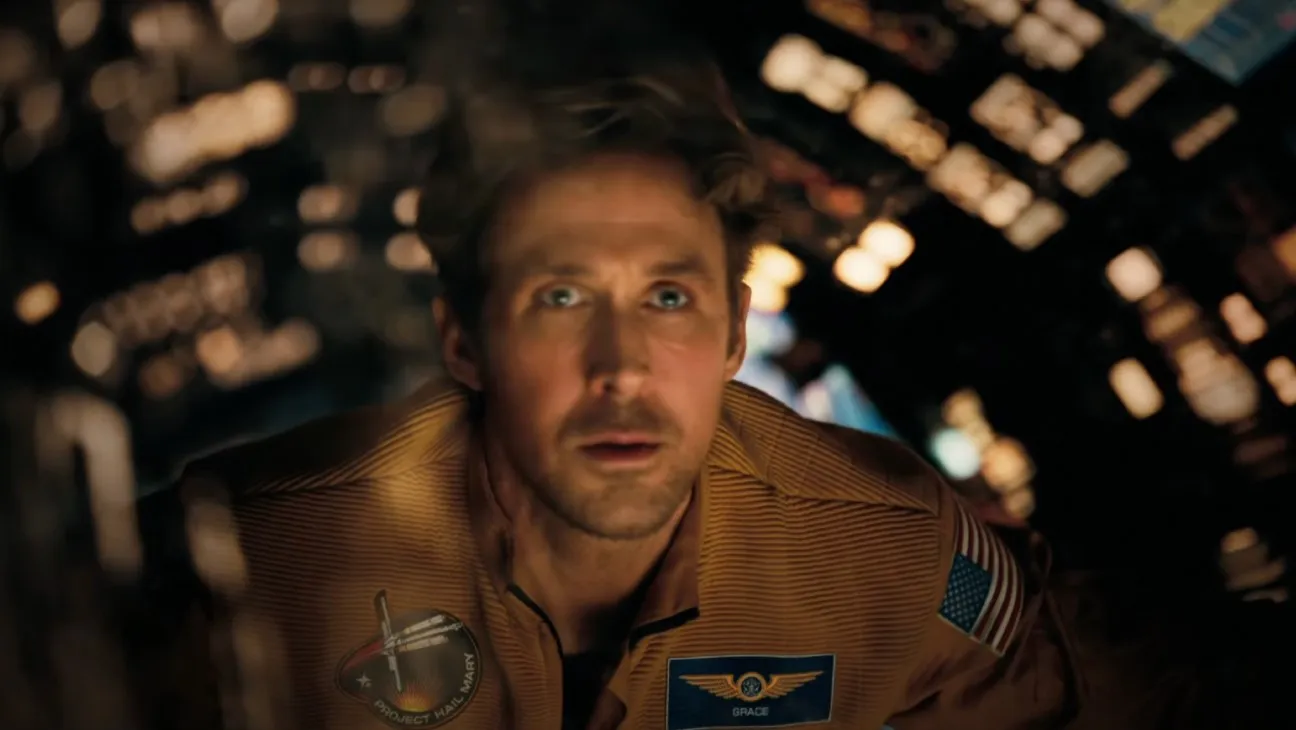
From $200M Budget to $538M Global Hit: How Project Hail Mary’s Internal Valuation is Changing Hollywood Windowing
HOLLYWOOD — The gravitational pull of Ryan Gosling is officially a billionaire-tier business asset. As of today, April 19, 2026, Project Hail Mary has not only defied the vacuum of space but has also successfully orbited past the $538 million mark at the global box office.
For Amazon MGM Studios, this isn’t just a win; it is a proof of concept for their entire theatrical-first strategy. But while the popcorn-munching public is cheering for Ryland Grace and Rocky, the real deal-making is happening in the backrooms over the valuation of the film’s OTT (over-the-top) streaming rights.
Because Amazon vertically integrates its content—producing via Amazon MGM and streaming via Prime Video, the “sale” of OTT rights isn’t a traditional third-party transaction.
Instead, it is a high-stakes internal valuation. To satisfy the lucrative backend points for stars like Ryan Gosling and the directing duo Phil Lord and Christopher Miller, Amazon has reportedly applied an internal SVOD license fee valuation that mirrors the film’s massive $200 million net production budget.
The Strategic Valuation of a Space Odyssey
When Amazon acquired MGM for $8.5 billion in 2022, they were buying the right to make exactly this kind of “four-quadrant” blockbuster.
Project Hail Mary represents the apex of that investment. In the current market, a hit like this doesn’t just “go” to streaming; it is licensed internally at a premium.
Industry insiders suggest the internal transfer fee for the SVOD window on Prime Video is being valued at north of $250 million.
Why such a high number? It is all about the “Halo Effect”. Amazon MGM distribution head Kevin Wilson has noted that theatrical success provides a direct lift to Prime Video subscriptions and viewership retention. By valuing the rights this high, Amazon can effectively buy out the theatrical profit participation (backend points) of the talent.
For a movie that cost $200 million and has already grossed over $538 million, the profit participation triggers for Gosling and Lord & Miller are currently hitting “stratospheric” levels.
The broader strategic impact is clear: Amazon is using the box office to subsidize the content costs of its streaming service.
While traditional studios like Warner Bros. struggle with debt, Amazon’s deep pockets allow them to “pay” themselves a record-breaking license fee to keep their top-tier talent happy and their platform stocked with exclusive, high-value IP.
Is this actually a “sale” if the money stays in the same house? Technically, no.
But from an accounting and ROI perspective, it is the only way to justify a $200 million spend on an original sci-fi property.
Hollywood is currently obsessed with “windowing,” and Amazon just proved that a 45-to-90-day exclusive theatrical run is the best marketing campaign a streaming service could ever buy.
Timing and the Windowing Gamble
The timing of this digital rollout is equally calculated. While smaller titles are being shuttled to PVOD (Premium Video on Demand) within 21 days, Amazon is holding Project Hail Mary in theaters for an extended window.
According to reports from Variety and Boxoffice Pro, the film is expected to hit digital rental platforms in late April 2026, roughly 40 days after its March 20 debut.
The full SVOD launch on Prime Video is likely slated for early summer 2026. This delay is a direct response to the film’s incredible “legs” at the box office, where it saw only a 32.8% drop in its second weekend. By stretching the theatrical window, Amazon maximizes the “Willingness to Pay” score among audiences who missed the theatrical run, creating a secondary revenue spike before the movie becomes “free” for Prime members.
The Reality Check: The Cost of Scientific Success
Let us be real for a second: Does a $538 million box office on a $200 million budget actually mean “profit” in the old-school sense?
If this were a Sony or Universal release, the answer would be “barely”. Between the theater’s 50% cut and the massive $100 million-plus marketing spend, a $200 million movie usually needs $500 million just to break even.
However, Amazon plays by a different set of rules. For them, Project Hail Mary isn’t just a movie; it is a recruitment tool for the Amazon ecosystem.
Every person who buys a ticket is a potential Prime subscriber. Every person who watches the digital release might buy an Echo or a bag of coffee on the same app. This “Halo Effect” is how they justify the $200 million “Hail Mary”.
They aren’t just selling tickets; they are buying the cultural conversation.
The BingeTake Verdict
This deal—or internal valuation—is a masterstroke for Ryan Gosling. By securing a massive upfront fee and a theatrical-first release, he has guaranteed himself a “Martian-level” payday without the risk of a “streaming-only” dump.
For Amazon, this is the best $200 million they have ever spent.
They have turned a niche sci-fi book into a global phenomenon that outpaced Dune and challenged the Super Mario Galaxy Movie for the 2026 crown.
The bottom line?
Expect the “Internal License Fee” model to become the new standard for how tech-giants value their theatrical hits to keep the Hollywood elite in their orbit.
Do you think Amazon should keep Project Hail Mary in theaters for a full 90 days, or is it better to move it to Prime Video quickly to fight off Netflix’s summer slate?
Join BingeTake
Get Box Office Updates directly on WhatsApp from your personal Box Office Insider.
Related Posts





You May Have Missed

About the Author

Ganesh Mishra
Business Analyst
Hi, I'm Ganesh. I’ve spent the better part of my career obsessed with how the entertainment industry actually works behind the scenes, looking at the contracts, the streaming wars, and the massive deals that decide what you’ll be watching next Friday. I love breaking down complex business moves into simple stories, and I’m here to make sure you’re always the most informed person in the room when it comes to the business of entertainment.